
DiMarzio DP187BK
1,295 SEK
*** This product is only available for online purchase or on order in shop at the moment
- Secure payment by card
- E-mail us, we reply swiftly!
- ConditionNew
Description
Article no.: 376219117650
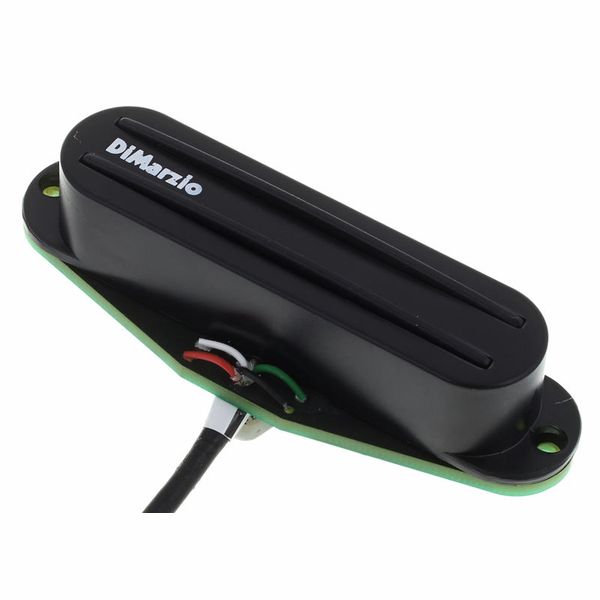
The Cruiser® Bridge DP187BK.
If you?re a serious traditional Strat® player, you probably won?t want to know about pickups with side-by-side coils. But if you?re the player who?s up for something more modern with no 60-cycle hum, string drop-outs or sustain-killing magnet pull, we designed The Cruiser® for you. Harmonic overtones are right where you expect them to be from a ?true? single-coil, and the mid-range is open and vocal-sounding. It?s hotter than the traditional single-coil, and the bass strings have a bit more chunk; this is an excellent pickup to combine with medium-output humbuckers, and it maintains its tonal identity with high-gain amps and multiple effects.
Recommended For All positions. Bridge position with lower output models in neck and middle, or neck and middle position with a higher output bridge pickup or full-size humbucker.
Tech Talk
The obvious question about The Cruiser® is ?How does it compare to a single-coil sound?? Our feeling is that the unwound strings (?E?, ?B?, and ?G?) are very close, and the wound strings (?D?, ?A?, and low ?E?) are fatter-sounding than a true single-coil. There's also a midrange scoop that's unique to the Cruiser Bridge. This is really effective for getting big-sounding chords, because high and low strings sound more spread out from each other. Having a total magnet pull that's about 40% less than standard single-coils also means The Cruiser® can be adjusted much closer to the strings for more power than stock pickups can achieve.
Specs. DP187BK:
Finish: Black.
Wiring: 4 Conductor.
Magnet: Ceramic.
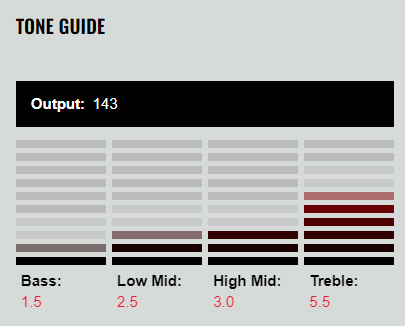
Output mV: 143.
DC Resistance: 5.75 Kohm.
Year of Introduction: 1994.
Patent: 4,501,185.