
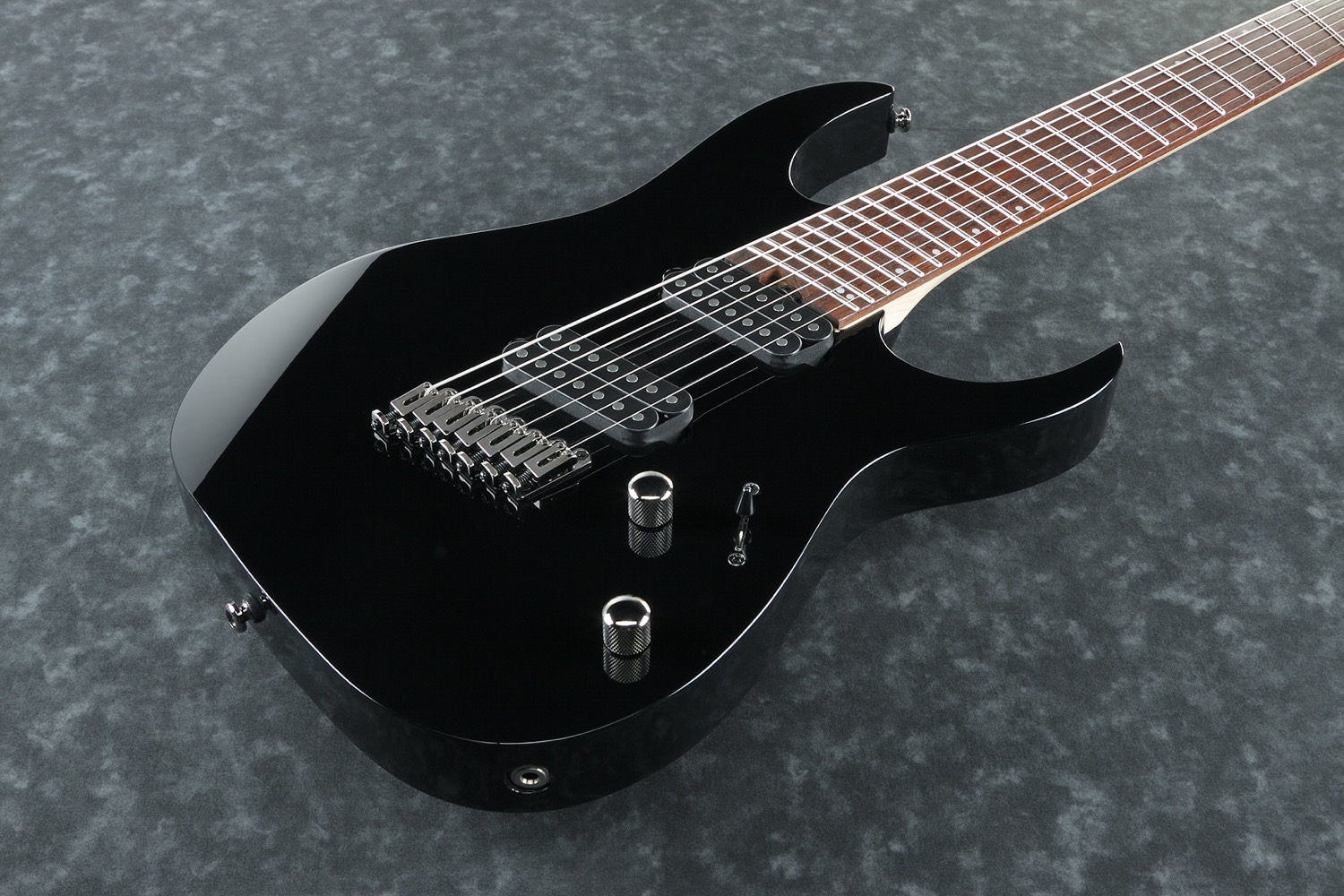
Ibanez RGMS7-BK
6,975 SEK
*** This product is only available for online purchase or on order in shop at the moment'
- Secure payment by card
- E-mail us, we reply swiftly!
- ConditionNew
Description
Article no.: 310452631414
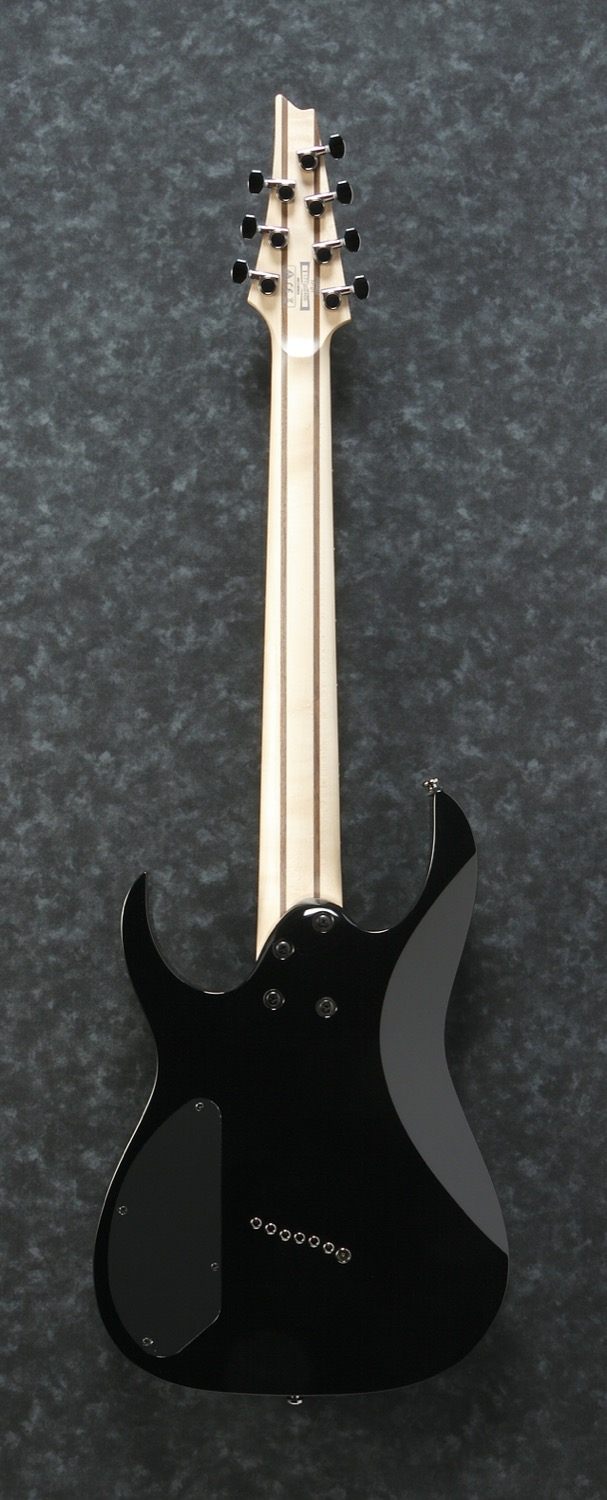
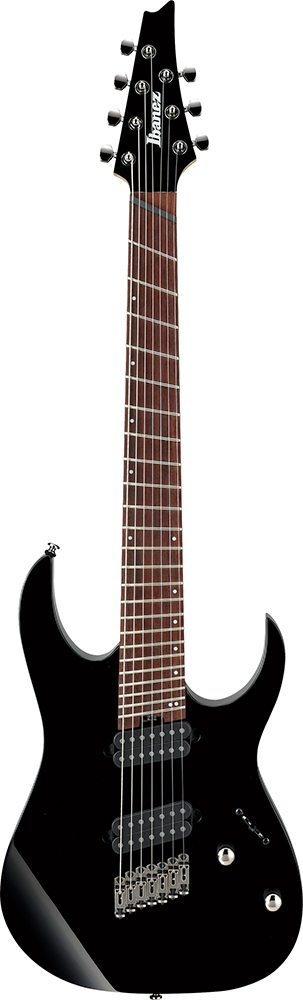
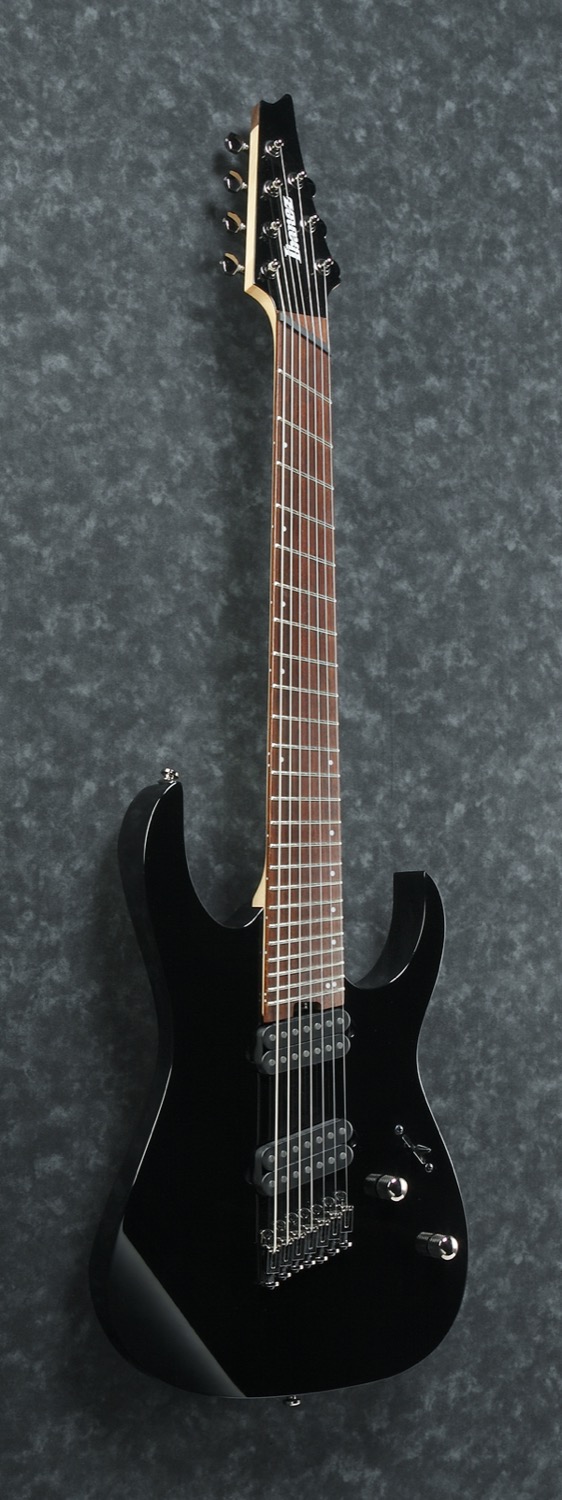
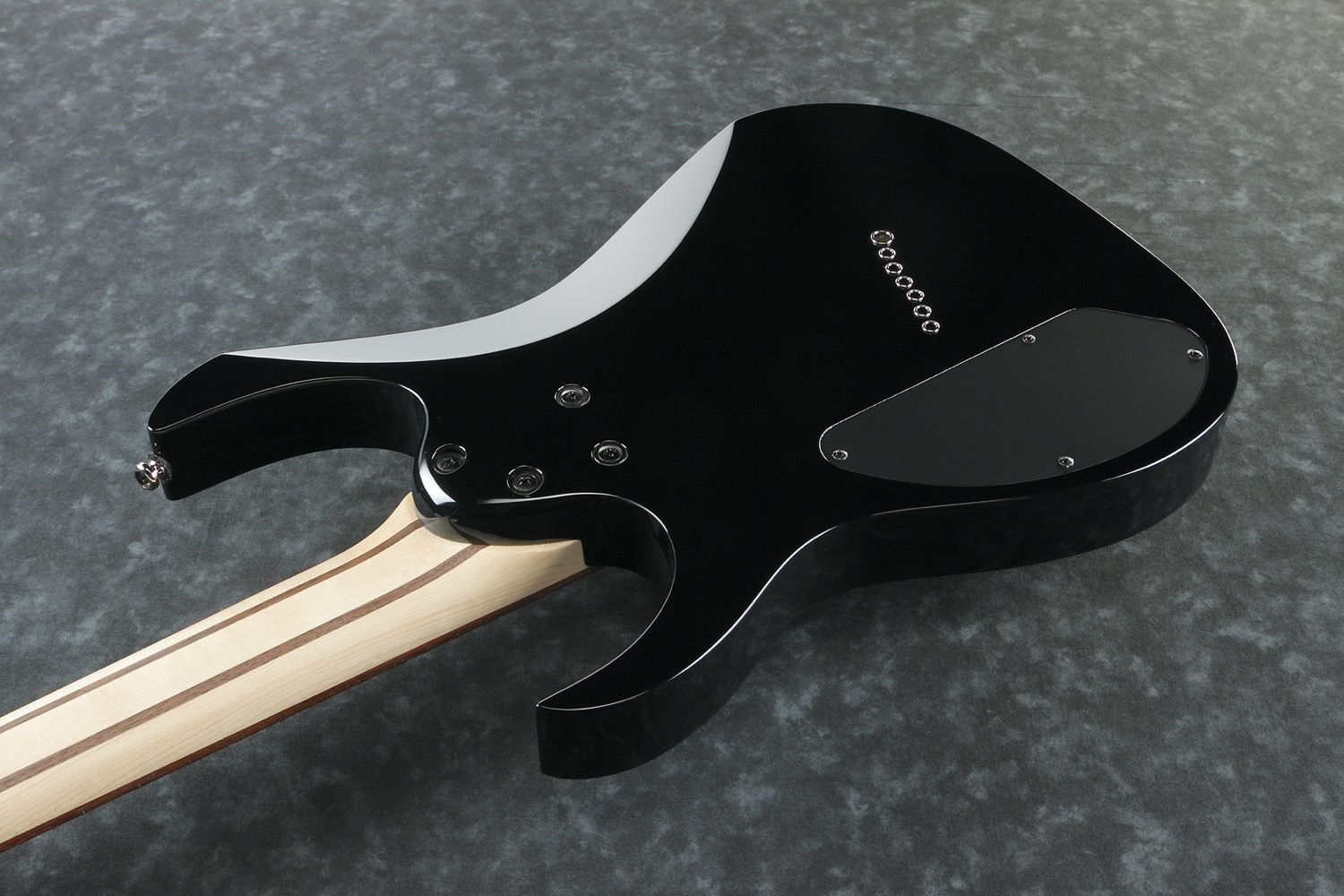
RGMS7-BK (Black) Electric Guitar, Multi-scale.
The MS addition to the RG name is that the guitar is equipped with a multi scale neck (often called Fanned Frets), which may look a little crazy to one who has never seen it before.
Multi Scale is what it sounds like, simply that each string has a different scale / measurement, longer on the low / thick strings and shorter on the high / thin.
Ibanez was the first to build Multi Scale, Fanned Frets, or whatever you want to call this amazing invention, on instruments that are not custom ordered boutique instruments (but a price tag after that). All in the name of finding satisfactory solutions to the problems that contemporary metal musicians encounter with low-tuned guitars. That is, the low strings become fluttery and indistinct if the "solo strings" are to feel playable. Or vice versa, if the low ones are good, the bright ones become almost unplayable finger splitters. To get stability in the low end, you need either a longer scale or very thick strings, often a combination of both.
With multi scale, you get an instrument that feels and plays completely balanced across the entire register, the ultimate compromise between two conflicting goals.
The recent development of music with lower tunings and more strings places completely new demands on what the instruments must be able to do. Traditional guitars with 6 strings, straight frets and short mensur simply do not work anymore, strings become like boiled spaghetti, intonate like a shot crow, etc. Multi Scale is a solution to these problems, in that all strings have different mensur.
Multi Scale also has the advantage that it is extremely comfortable and ergonomic to play, it is simply nice for the hands. They follow the natural angle of the hand depending on where on the neck you play. The break-in time, the time to get used to playing with it, is zero. The hands adapt instantly without any problems whatsoever. The eyes take a little longer to adjust, maybe fifteen minutes or so.
Instead of choosing a traditional angled bridge, Ibanez has used a technique they have been successfully using on their basses for many years called the mono-rail bridge. In simple terms, each string is a stable, stables that are completely separated from each other. This provides optimal isolation of each string and the strings can vibrate without affecting and inhibiting each other.
These are instruments for those who want the best for low tuned playing.
They are built to hit the Richter scale and still be very good instruments for solo/melody playing.
Specs:
- Wizard III-7 for Multi Scale.
- 5pc Maple/Walnut neck.
- Nyatoh body
- Jatoba fretboard w/White split off-set dot inlay.
- Jumbo frets.
- Mono-rail bridge.
- Array-7 MS (H) neck pickup.
- Array-7 MS (H) bridge pickup.
- String Gauge: .009/.011/.016/.024/.032/.042/.059.
- Cosmo black hardware.
Fitting case: MR500C.
Neck:
- Scale : 686mm/27 - 648mm/25.5 .
- Width 48mm at NUT.
- Width 68mm at 24F.
- Thickness 19mm at 1F.
- Thickness 21mm at 12F.
- Radius : 400mmR.
Coupling:
1. Stallmick in series*
2. Stallmick split** in parallel with split neck pick
3. Stallmick split in series with split neck pick
4. Neck pick with the coils connected in parallel***
5. Neck mic in series
* Series, both coils of the mic are connected in series one after the other and the mic gives as much output and power as it is designed for. If you read about the mic on the manufacturer's website, it is this mode that is described. The mic is then noise canceling and completely silent.
** Split, that the mic is split means that one of the mic's two coils is turned off and becomes a single coil (only one active coil). This means that you get half the output and power of the mic when the coils are connected in series. The mic loses its hum canceling ability when one coil is turned off. But modes 2 and 4 are hum canceling and quiet when the active coil on the stall (mode 2) or throat mic (mode 4) is connected in parallel with the center mic.
It gives a weaker, brighter and more open sound with a cleaner, clearer and firmer bass. A sound that is very well suited to clean and semi-distant sounds (or for that matter, to open up even a hard distant sound). Since only one coil is active, you can choose whether you want the active coil towards the bridge or towards the neck, which affects how it sounds, warmer closer to the neck and brighter closer to the bridge (requires physically turning the mic in the guitar).
*** Parallel, the mic's two coils are connected in parallel with each other.
It gives a weaker, cleaner, clearer and slightly lower bass sound than when the coils are connected in series.
It is not at all in the single coil direction as coil splits are, the sound still has a clear humbucker character. Very useful for, for example, accessing cleaner and clearer neck mic sounds, both for clean chord comps and lead sounds where you appreciate the extra dynamics and separation the mic gets. There is no clear or exact answer to how much weaker the mic becomes by being connected in parallel, it depends entirely on the construction of the mic. Mics that are constructed of two identical coils, there will be about 25-33% lower output when you connect the mic in parallel instead of in series. On some mics it will be even weaker than that, down to 50% of the output it has in series. The mic is still hum-canceling.