
Ibanez S670QM-DEB
8,575 SEK
Dragon Eye Burst
- Secure payment by card
- E-mail us, we reply swiftly!
- ConditionNew
Description
Article no.: 310494201414
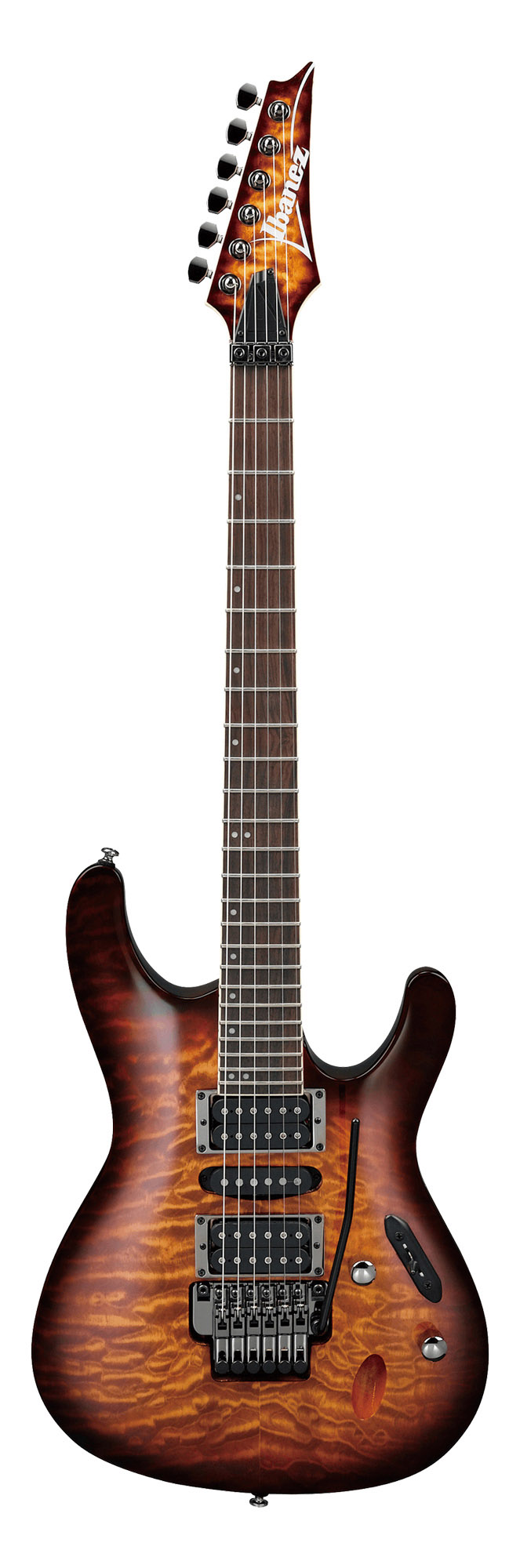
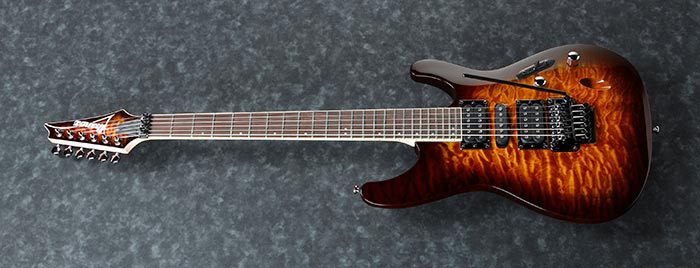
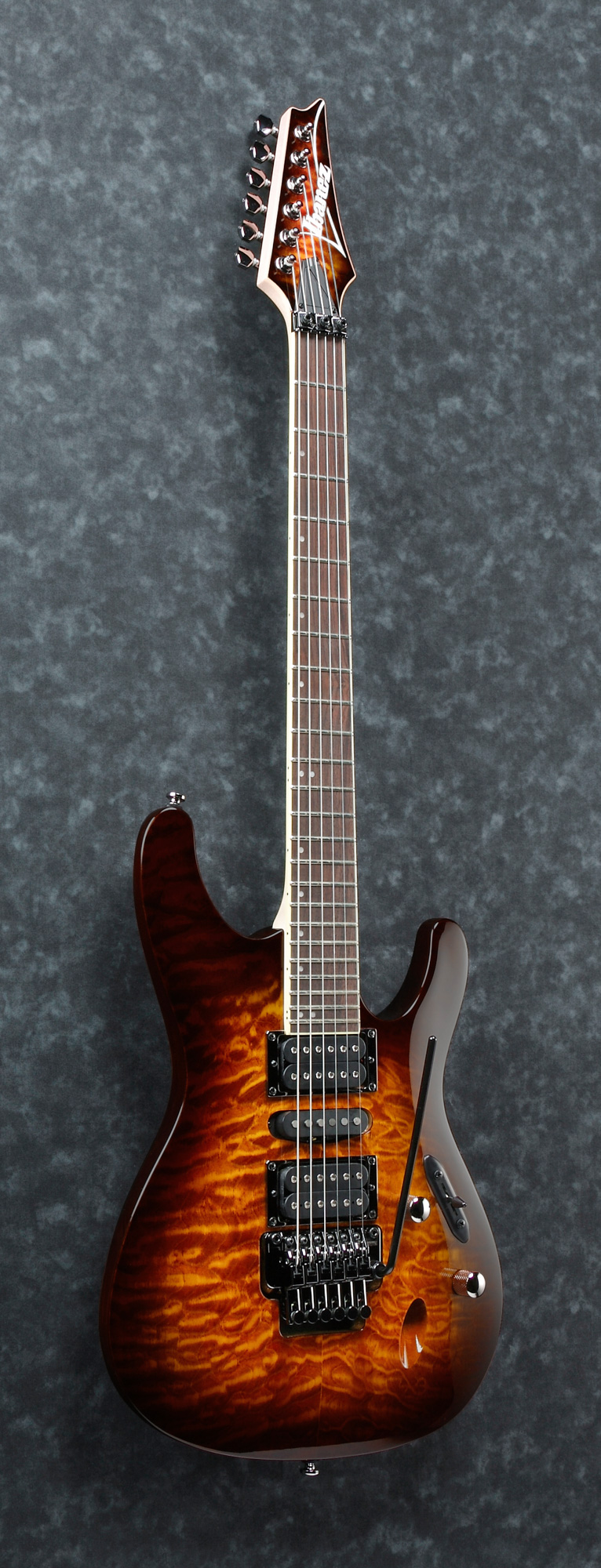
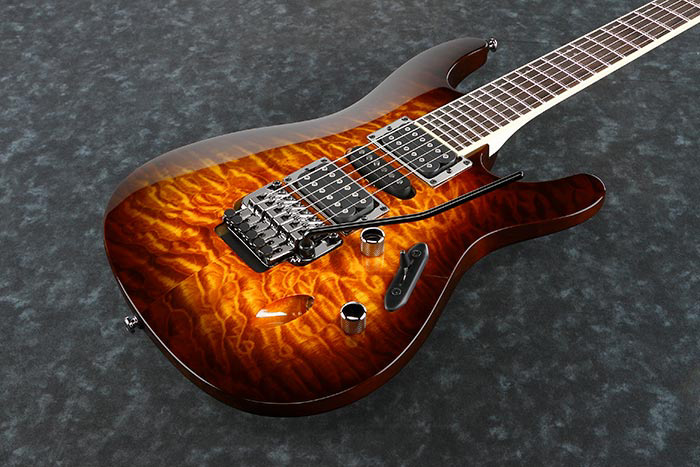
S670QM-DEB (Dragon Eye Burst).
The S model is a unique Ibanez design that has been around since -87, as long as the RG models.
The model was first called Sabre but soon changed its name to the short and concise "S".
It has also been the starting point for various signature models, where probably the FGM100 (Frank Gambale) model is the most famous.
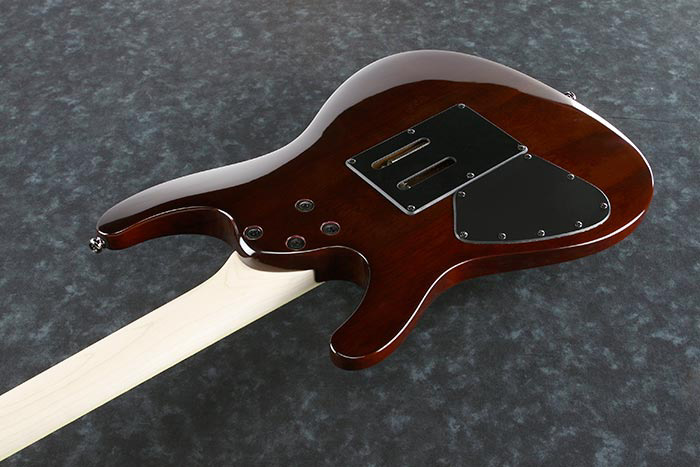
It is a lightweight and ergonomic guitar with a heavily sculpted body that is normally thick in the middle but which becomes much thinner towards the edges (on both front and back), it gives a shape that almost flows with the body when you stand up and play. An ultimate guitar for guitarists who play long sets live, who practice long sessions or who just want an extremely ergonomic guitar.
The guitar has an Ibanez 24 band Wizard III neck, Wizard III is a slightly thicker version of the popular Wizard profile, also a little rounder and softer profile. It also has a radius of 400mm instead of the Wizard neck's 430mm.
A very nice neck for those who want a little more wood in their hand without the neck being thick and stiff.
A fast and very easy-to-play neck equipped with 24 well-sanded jumbo bands.
The body is made of Merant (mahogany), a tonewood that goes in the slightly warmer and middling direction in terms of sound. The treble is a little softly rounded but without losing clarity and separation. It has a pleasant hump in the mid-range that makes the sound of melody / soloing become fat and singing with long sustain.
S670QM is equipped with Ibanez Edge Zero II sway, a stable and flexible tremolo, 3-piece Wizard III neck in maple with Rosewood fingerboard.
Spec:
- Wizard III neck in maple.
- Rosewood fingerboard w/Offset dot inlays.
- Meranti body with Quilted maple top.
- Jumbo frets.
- Edge Zero II tremolo.
- Quantum (H) neck pickup.
- Quantum (S) mid pickup.
- Quantum (H) bridge pickup.
- Cosmo Black hardware.
Matching case: Ibanez M300C
Matching bag: Ibanez IGB540-BK.
Neck:
- Scale: 648mm/25.5".
- Width at saddle: 43mm.
- Width at last fret: 58mm.
- Thickness at first fret: 19mm.
- Thickness at 12 frets: 21mm.
- Radius: 400mmR.
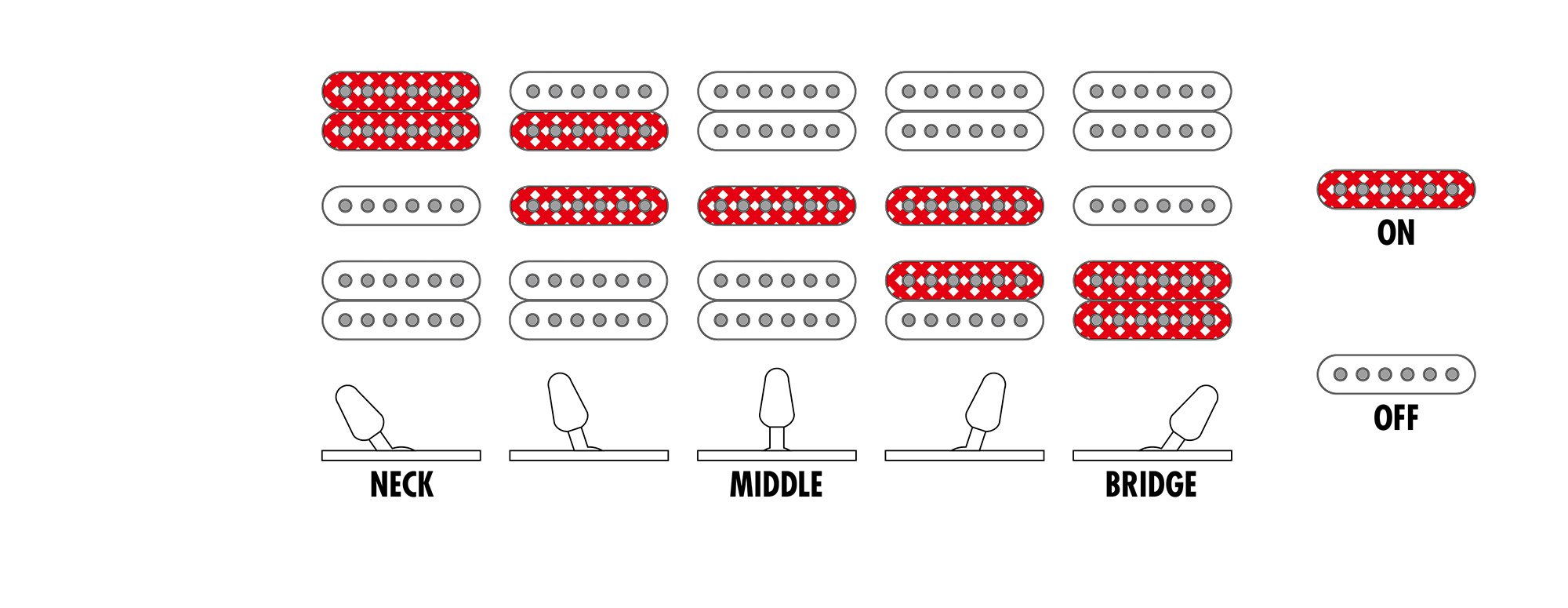
The mics are connected on a 5-position swicth with common tone and volume control. The modes you can access on the switch are.
1. Stable mic in series*
2. Split** stable mic + split neck mic (inner coils)
3. Stable mic in series + neck mic in series parallel connected with each other
4. Neck pick in parallel***
5. Neck mic in series
* Series, both coils of the mic are connected in series one after the other and the mic gives as much output and power it is designed for. If you read about the mic on the manufacturer's website, it is this mode that is described. The mic is then noise canceling and completely silent.
** Split, that the mic is split means that one of the mic's two coils is turned off and becomes a single coil (only one active coil). This means that you get half the output and power of the mic when the coils are connected in series. The mic loses its hum canceling ability when one coil is turned off. But modes 2 and 4 are hum canceling and quiet when the active coil on the stall (mode 2) or throat mic (mode 4) is connected in parallel with the center mic.
It gives a weaker, brighter and more open sound with a cleaner, clearer and firmer bass. A sound that is very well suited to clean and semi-distant sounds (or for that matter, to open up even a hard distant sound). Since only one coil is active, you can choose whether you want the active coil towards the bridge or towards the neck, which affects how it sounds, warmer closer to the neck and brighter closer to the bridge (requires physically turning the mic in the guitar).
*** Parallel, the mic's two coils are connected in parallel with each other.
It gives a weaker, cleaner, clearer and slightly lower bass sound than when the coils are connected in series.
How much weaker the mic becomes by being connected in parallel, there is no clear or exact answer, it depends entirely on the construction of the mic. Mics that are constructed of two identical coils will be about 25-33% of the output the mic has in series when connected in parallel, some mics will be even weaker than that and some have as little as 50% of the output it has in series. If you talk about resistance (ohms), it has about ¼ of the ohms it measures in series left if you connect it in parallel (on a mic with two identical coils).
The drop in output also makes the mic more dynamic, the sound becomes less compressed and reacts more to the nuances of one's attack and play. There will be, for example, a more prominent difference between loose and hard plectrum hits.
It is an extremely useful mode to get a softer, cleaner, clearer and more dynamic sound, most often used in the neck mode. Great for getting a good clean sound out of a slightly hotter humbucker that otherwise easily becomes tinny, flat, sterile and lifeless. Or to clean up an indistinct neck pick when playing with distorted sounds, or why not to get a more open and vibrant crunch sound.
The difference in output is not perceived as great as it may seem on paper, especially not with distorted sounds. In hotter humbuckers, parallel connection is usually a better option than splitting to get a weaker and more vibrant sound.
The mic is still hum canceling and quiet.